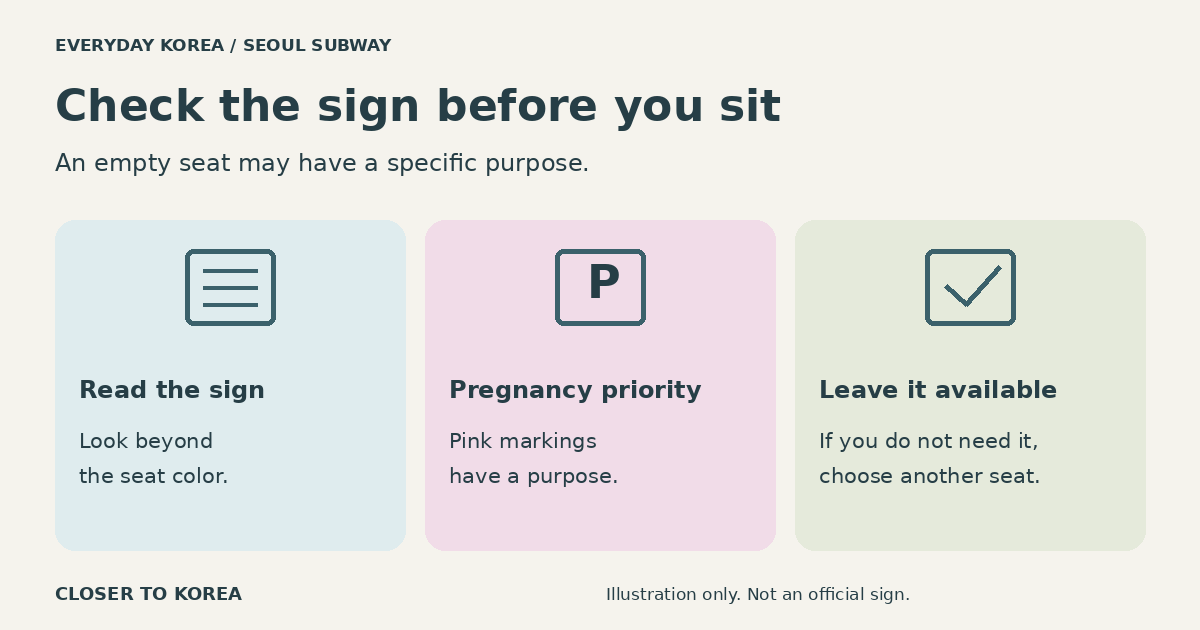
On a first subway trip in Seoul, an empty seat can seem like an easy decision. Before sitting, take a moment to check the sign above or beside it. Some seats have a specific purpose, and the pink markings are not simply decoration.
The clearest visitor-friendly approach comes from Visit Seoul’s transport etiquette guide: leave designated priority seats available for the people who need them. That is a courtesy recommendation, not a claim that every passenger behaves identically or that this article explains the law.
Priority seats are not only for older passengers
Visit Seoul’s accessibility guide describes priority seating at the ends of subway cars for older passengers and people with disabilities. Its etiquette guide also includes passengers with infants, children, and people who are unwell among those the seating is intended to support.
For a visitor, the sign is more useful than trying to memorize a carriage layout. Look for the passenger symbols and any wording identifying priority use. Do not decide that a seat is ordinary just because its upholstery looks similar to the seats next to it.
What do the pink seats and stickers mean?
Pink pregnancy-seat markings identify seating for pregnant passengers. The Institute for Basic Science’s Living in Korea guide shows several ways this is communicated: a wall sticker, a floor marking, and seats with distinctive pink details. It also shows a marked seat that otherwise looks like an ordinary one.
One phrase the IBS guide explains is 임산부 먼저 (imsanbu meonjeo), meaning that pregnant women have priority. Read the sign as well as noticing the color. The guide’s examples are useful for recognizing the purpose of a marker, not for predicting the exact design on every train.
Why not wait until someone looks pregnant?
Visit Seoul explicitly includes early pregnancy, when someone may not visibly appear pregnant. IBS also explains the pregnancy badges that passengers can attach to a bag. A badge is a helpful cue, but appearance alone is not a reliable way to decide who needs a seat.
Our practical advice is simple: if you do not need a designated seat, choose an ordinary one or stand. Do not question a seated stranger about their body or medical situation. The aim is to make the journey easier, not to turn passengers into inspectors.
If you sit down by mistake
If you notice the sign after sitting and do not need that seat, move when it is safe to do so. A brief apology is enough if someone has pointed it out. There is no need for a long explanation or a confrontation.
If you need a seat yourself, you can ask politely: “May I sit here?” You do not need to tell a stranger your full medical history. If you need help navigating the station, approach station staff rather than relying on another passenger to assess your situation.
A quick boarding reminder
Before thinking about seats, let people leave the train. Visit Seoul advises waiting for passengers to get off before boarding. Once inside, check the seat signs and keep the distinction clear: an empty space and an ordinary available seat are not always the same thing.